
Markson’s Thoughts on the TPI Service Charge Index 2026
The Property Institute (TPI) released their Service Charge Index 2026 last month and it made for really interesting reading. We’ve highlighted below parts of the report which help breakdown the research in more detail.
The TPI Service Charge Index was established to provide the residential property sector with a robust, evidence-based benchmark for understanding how service charge costs are evolving. As service charges continue to play a critical role in the long-term management, maintenance, safety, and sustainability of residential buildings, access to reliable and comparable cost data has never been more important.
The Index offers valuable insight into expenditure trends across different property types, helping property managers, leaseholders, developers, policymakers, and industry stakeholders better understand the financial pressures shaping the sector. By analysing large-scale service charge data and identifying the drivers behind cost movements, the Index supports greater transparency, informed decision-making, and improved industry standards. Since its launch in 2024, it has become an important reference point for the sector, reflecting both the complexity of modern building management and the growing need for accurate, standardised, and representative service charges.
The sample analysis contained service charge costs and budgets (2026 only) from 2,137 residential estates covering 117,052 homes.
Main Findings – On average, service charges have broadly tracked inflation
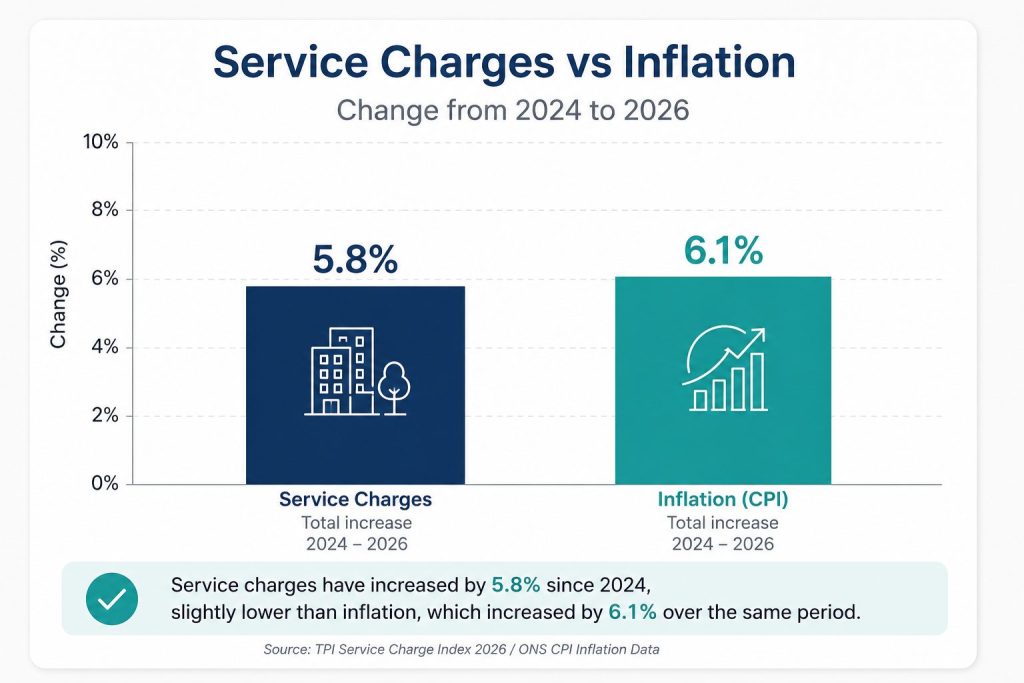
The dataset shows that budgeted service charges for 2026 rose by 6.3%, compared with 2025 costs. This followed a 0.5% fall in 2025, from 2024. Overall, the average service charge bill has risen by 5.8% since 2024. This is slightly lower than the rate of inflation, which, according to the ONS, increased by 6.1% over the same two-year period.
- There is significant variation by building height, with average budgeted service charges being £2,418 for under 11m buildings; £3,507 for 11-18m buildings; and £4,447 for buildings over 18m.
- There is also a pronounced deviation by building age, with average service charges for a building less than 25 years old being £2,508 compared with £5,208 for a building over 50 years old. Buildings between 25 and 50 years old had a slightly lower average of £2,411.
- Costs of Repair & Maintenance, contributions to Reserve Funds, and the cost of Buildings Insurance make up around 50% of the average service charge costs.
- The expenditure categories with the highest rate of growth between 2024 and 2026 are: Building Safety Act compliance costs (up 53%, albeit this is a small portion of the overall service charge); Contribution to Reserve Funds (up 26%); and On-site Staff costs (up 11%).
£2,880.00 was the average service charge per leaseholder in the 2026 Budgets
The average cost per leaseholder ranges from £1,525 in the lowest tenth percentile to £8,680 in the highest, reflecting the significant variation driven by building type, height, age and location.
Building age is a major contributing factor to Reserve Funds. Reserve fund requirements appear to be significantly higher in older buildings: leaseholder contributions to Reserve Funds in buildings built before 2000 are 2.5 times higher than those in newer buildings, reflecting the greater maintenance requirement of older stock as their materials, structures, and building services start to deteriorate.
Looking for Transparent Property Management?
Understanding service charges is only one part of effective property management. At Markson Property Management, we work closely with leaseholders, directors and freeholders to deliver clear communication, proactive maintenance planning and transparent financial management that protects both your building and your long-term investment.
Whether you’re looking for a new managing agent or simply want to understand how your development could be better managed, we’re here to help: https://markson.uk/contact-us/
Learn more about our Property Management services or contact our team today to discuss your development.
Here at Markson we manage a significant number of buildings that are over 50 years old so we can see the above trends in the Service Charge Budgets we create for our clients. Having suitable Reserves for older buildings ensures we can maintain these properties to a good standard and protect leaseholder’s investments. Buildings are living things that require regular maintenance and keeping on track of this will avoid large financial surprises in the future. We’re thankful for the TPI in helping pull this data together which will allow leaseholders greater transparency of the ‘real’ costs of property management.
For a more in-depth review of the TPI Service Charge Index 2026 please follow this link:
Share This Story, Choose Your Platform!
Related Blogs

The Benefits of Type C Water Tanking: Why It’s the Best Choice for.
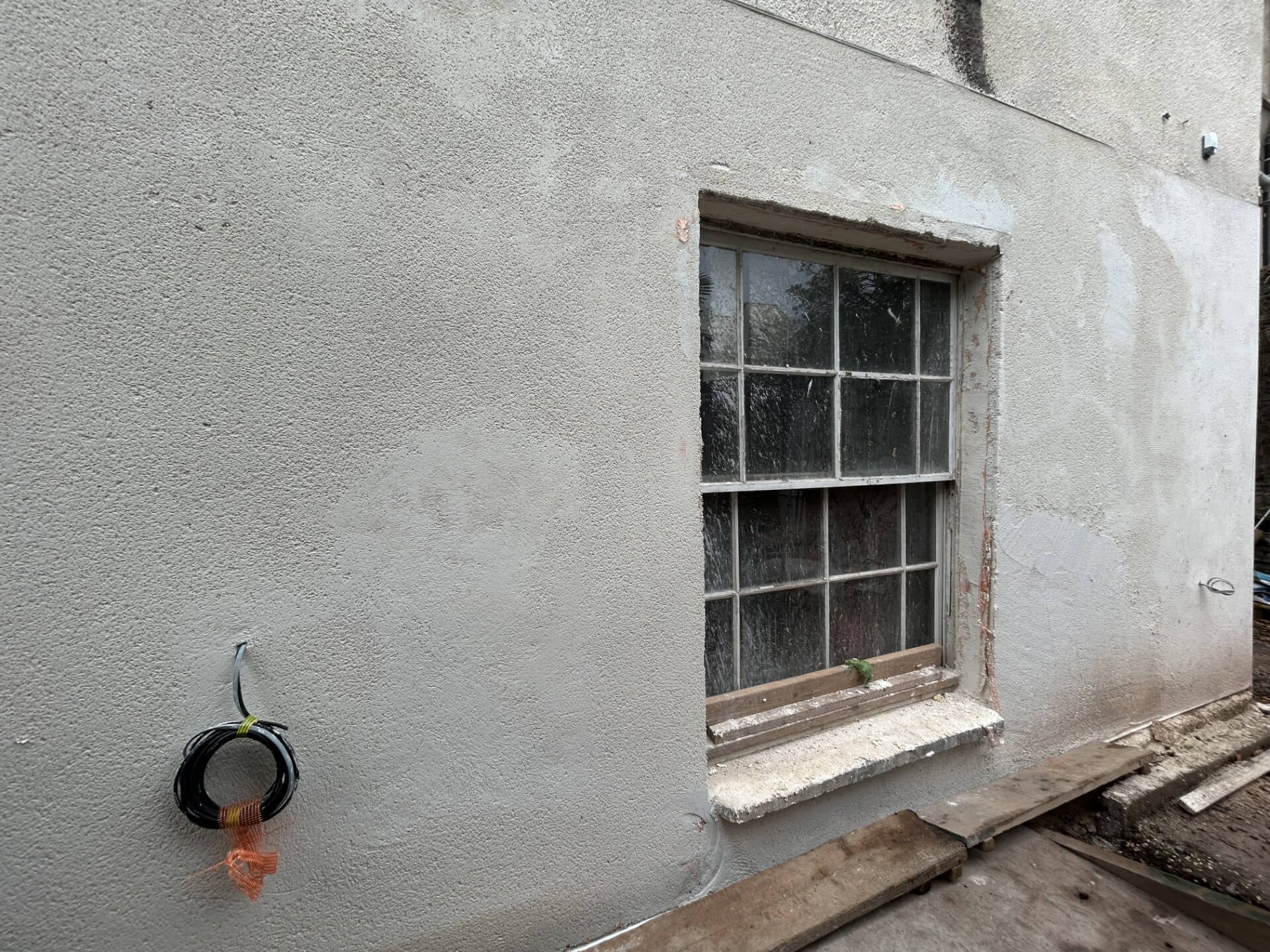
How Lime Render and Cork Insulation Transformed One of Our Bristol Retrofit Projects.

Markson Construction Recognised as a Retrofit West Trusted Professional We’re proud to announce that Markson.

If you’re looking for one of the smartest ways to increase your home’s value, a.
How Apprenticeships Are Helping Build the Future of Construction in Bristol The construction industry across.

Owning a leasehold property comes with a range of responsibilities and understanding how your building.